Missing teeth can affect more than the appearance of a smile. Depending on their location and number, they may change how you chew, influence speech, or make it harder to maintain a comfortable bite. Dental implants are one option for replacing missing teeth, but understanding the process, requirements, and alternatives is essential before deciding whether treatment is right for you.
For people researching dental implants in Miami and Miami Beach, Smile4Life Dental offers implant dentistry alongside general and cosmetic dental services. Its Miami Beach location provides a starting point for patients who want to discuss tooth replacement with a dental professional and understand which options may suit their circumstances.
What Is a Dental Implant?
A dental implant is a device placed in the jawbone to support a replacement tooth or dental prosthesis. In many conventional treatments, the implant component is designed to integrate with the surrounding bone. Once the treatment site has healed sufficiently and the dentist determines that it is appropriate, the implant can support a restoration such as a crown.
The complete restoration generally involves several components. The implant is positioned in the jawbone, an abutment connects the implant to the visible restoration, and a crown or other prosthesis replaces the missing tooth above the gumline. The exact design depends on the patient's needs and the treatment plan.
Implants can be used in different situations, including replacing an individual tooth or supporting certain larger restorations. However, the most appropriate solution depends on the number and position of missing teeth, bone availability, gum health, medical history, and other clinical factors.
A consultation is therefore more than a discussion of price. It is an opportunity to assess whether an implant is suitable, identify any additional treatment that may be necessary, and compare the potential benefits and limitations with other tooth replacement options.
Why Patients Consider Dental Implants
People may explore dental implants because they want a stable replacement for a missing tooth or a solution that does not rely on neighboring teeth for support in the same way as a conventional tooth-supported bridge.
When appropriately planned and maintained, implants can provide support for chewing and help restore the appearance of a complete smile. Their design can also allow the visible restoration to be shaped and colored to complement surrounding teeth.
Nevertheless, implants are not automatically the best choice for everyone. A conventional bridge, removable partial denture, or another option may be more appropriate depending on the clinical situation, treatment preferences, timeline, and budget.
Patients should also understand that an implant does not behave exactly like a natural tooth. It does not have the same biological structures as a natural tooth root, and the tissues surrounding it can still develop inflammatory problems. Regular professional care and daily cleaning remain essential.
The goal of a tooth replacement consultation should be to identify an option that balances function, appearance, oral health, maintenance, and practical considerations over time.
Who May Be a Candidate for Dental Implants?
Implant candidacy is determined through an individual evaluation. Factors commonly considered include the condition of the jawbone, the health of the gums, the location of the missing tooth, oral hygiene, and the patient's general medical history.
Adequate bone is important for supporting an implant. If bone volume is insufficient, additional procedures may sometimes be considered, although these increase the complexity, time, and cost of treatment. The dentist may recommend imaging or further assessment to understand the anatomy of the proposed treatment site.
Gum health also matters. Active periodontal disease may need to be treated before implant placement is considered. Patients who smoke or have certain medical conditions may face additional risks that should be discussed during treatment planning.
Some patients take medications or have medical histories that influence healing. It is important to share this information honestly with the dental team and consult the relevant healthcare professional when needed. Patients should not stop or change prescribed medication without appropriate medical guidance.
Age alone does not determine suitability. The key question is whether the patient's dental development, bone condition, health, and circumstances support the proposed treatment.
What Happens During the Implant Process?
Dental implant treatment generally involves several stages, although the sequence and timing vary by patient.
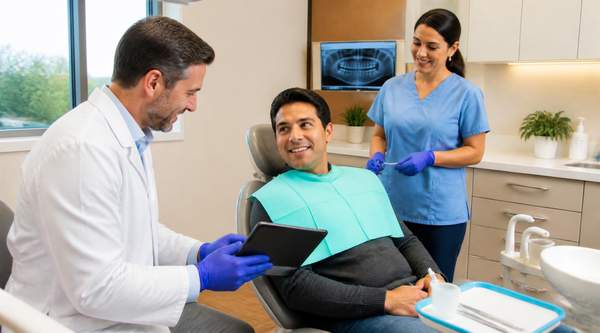
The first stage is a consultation and assessment. The dentist reviews the missing tooth or teeth, evaluates the mouth, considers relevant medical history, and determines whether additional imaging or specialist input is needed. This is also the time to discuss alternatives, fees, risks, and expected treatment duration.
If an implant is appropriate, the next stage may involve placing it in the jawbone. Some patients require a tooth extraction or preparatory treatment before placement. Others may need additional procedures if the bone or soft tissue requires attention. Not every patient needs these extra steps.
Healing follows placement. The length of this stage depends on factors such as the treatment site, bone condition, whether additional procedures were performed, and the clinician's assessment. The implant may need time to integrate with the bone before it can support the final restoration.
The restorative stage involves attaching the appropriate crown or prosthesis. The dentist considers fit, appearance, bite, and function before completing the restoration. Follow-up appointments allow the team to assess healing and address any concerns.
Because each case is different, patients should avoid relying on a universal timeline advertised elsewhere. Ask the treating dentist to explain the anticipated sequence for your particular situation and what factors might cause it to change.
Understanding Risks, Recovery, and Maintenance
Dental implant treatment is a surgical procedure when an implant is placed, so it involves risks. These may include discomfort, swelling, bleeding, infection, injury to nearby structures, problems with healing, or failure of the implant to integrate successfully. The nature and likelihood of complications depend on individual factors and the procedure performed.
The dental team should explain relevant risks before treatment and provide instructions for recovery. Patients should follow those instructions, attend recommended reviews, and contact the practice if symptoms are worsening or unexpected.
Long-term maintenance is equally important. Although the visible restoration cannot develop a cavity in the same way as a natural tooth, plaque can accumulate around it, and the surrounding tissues can become inflamed. Careful brushing, cleaning between teeth, professional maintenance, and attention to changes around the implant can help protect oral health.
The restoration may also experience wear or mechanical issues over time. The dentist can advise on suitable cleaning tools, review the bite, and discuss whether habits such as teeth grinding could affect the restoration.
An implant should be viewed as a long-term treatment commitment rather than a one-time purchase. Understanding the need for maintenance before beginning helps patients make realistic decisions.
Dental Implants Versus Other Tooth Replacement Options
Implants are only one way to replace missing teeth. A fixed bridge may be suitable when neighboring teeth can support a restoration, while a removable partial denture may be considered when several teeth are missing or when another option better fits the patient's needs.
Each approach has trade-offs. Bridges may require preparation of supporting teeth, depending on the design. Removable appliances require appropriate daily care and may need adjustment as the mouth changes. Implant treatment involves surgery, healing, and maintenance around the implant.
Cost and treatment time also differ. The initial price of an implant may not include every stage, such as imaging, extraction, bone grafting, temporary restorations, or the final crown. Patients should ask for a clear breakdown of the proposed treatment and confirm what is included.
A useful comparison looks at the complete plan rather than one component's price. Ask how each option affects neighboring teeth, comfort, function, maintenance, expected lifespan, and future treatment needs. The dentist can explain the clinical factors that influence the recommendation.
Finding Implant Dentistry in Miami and Nearby Communities
People searching for dental implants in Miami may consider providers in Miami Beach, Surfside, Bal Harbour, Bay Harbor Islands, North Miami Beach, and other nearby communities. Choosing a convenient location can make consultations and follow-up visits easier, but the quality of the assessment and the clarity of the treatment plan matter just as much.
Smile4Life Dental is located at 900 71st Street in Miami Beach, Florida, and includes implant dentistry in its broader range of dental services. Patients can contact the practice to ask about an implant consultation, the evaluation process, and whether their particular needs can be addressed there.
Before committing to treatment, ask who will perform each stage, whether specialist care is recommended, what diagnostic procedures may be required, and how follow-up care is organized. It is also reasonable to ask how the practice handles complications and whom to contact if concerns arise after a procedure.
Insurance benefits for dental implants vary significantly. Some plans exclude particular implant-related services, while others may provide benefits for certain components or related procedures. Confirm coverage, exclusions, waiting periods, and estimated out-of-pocket costs with the insurer and practice before treatment begins.
Take an Informed First Step
Replacing a missing tooth is an important decision that should reflect your oral health, clinical needs, budget, and expectations. Dental implants can be an effective option for suitable patients, but they require careful planning, healing, and ongoing maintenance.
For patients in Miami Beach and the surrounding Miami area, Smile4Life Dental provides a place to begin a conversation about implant dentistry and other restorative options. A professional assessment can help clarify whether an implant is suitable, what treatment stages may be involved, and which alternatives deserve consideration.
If you are considering dental implants, contact Smile4Life Dental to arrange a consultation and discuss your needs. Ask for an individualized evaluation, a clear explanation of the proposed treatment, and a breakdown of anticipated costs. With the right information, you can make a more confident decision about restoring your smile and supporting your long-term oral health.