A recent survey found that 40% of smart home device owners use less than half of their gadgets' advertised features, often citing setup frustration or a lack of interoperability. The underutilization of smart home gadgets, with 40% of owners using less than half of advertised features, reveals a stark disconnect: smart home technology promises to simplify daily living, but the reality often involves fragmented systems and unexpected setup challenges. Sleek advertisements depict effortless automation, yet the journey from unboxing to seamless integration often leaves users with disconnected devices and diminished value.
Based on current market trends and user feedback, the smart home market will likely consolidate around a few major ecosystems, making cross-brand compatibility a premium feature rather than a standard expectation.
The Five Smart Home Gadgets That Actually Deliver
1. Smart Thermostat (e.g. Nest Learning Thermostat)
Best for: Energy-conscious homeowners and those seeking automated climate control.
Imagine walking into a perfectly cooled home or waking to warmth without touching a dial. Smart thermostats learn your preferences, adjusting temperatures automatically. delivering tangible energy savings and comfort, a clear win in the smart home landscape. The New York Times' Wirecutter highlights their ability to adapt to schedules and detect occupancy.
Strengths: Significant energy savings | Automated comfort | Intuitive app control. | Limitations: Higher upfront cost | Requires professional installation for some systems | Learning curve for advanced features. | Price: $150-$250
2. Smart Lighting (e.g. Philips Hue Starter Kit)
Best for: Enhancing ambiance, security, and convenience with customizable illumination.
Control lights from anywhere, set schedules, or change colors to match your mood. transforming a basic utility into a dynamic experience. Simple installation and immediate impact make smart lighting a strong, accessible entry point into smart home living, proving its value beyond mere novelty.
Strengths: Easy installation | Mood lighting and scheduling | Remote control and automation. | Limitations: Bulbs can be expensive | Requires a hub for full functionality | Integration with some older fixtures is limited. | Price: $70-$150 (starter kit)
3. Smart Plug (e.g. TP-Link Kasa Smart Plug)
Best for: Making existing appliances 'smart' without significant investment.
Want to turn off your coffee maker from bed or schedule holiday lights? Smart plugs offer a straightforward way to automate nearly any device with an on/off switch. Their simplicity and affordability make them a gateway device, proving that even basic automation can deliver significant daily convenience.
Strengths: Affordable | Easy to set up | Works with most existing appliances. | Limitations: Only offers on/off control | No advanced features for the connected appliance | Can occupy an entire outlet. | Price: $15-$30 per plug
4. Smart Door Lock (e.g. August Smart Lock Pro)
Best for: Homeowners seeking enhanced security, keyless entry, and remote access control.
Never worry about lost keys. Smart locks provide secure, keyless entry and the ability to grant temporary access remotely. offering both peace of mind and practical convenience, making them a critical security upgrade that genuinely simplifies daily life.
Strengths: Keyless entry | Remote access and guest management | Activity logs for security. | Limitations: Battery dependence | Potential for connectivity issues | Higher price point. | Price: $200-$300
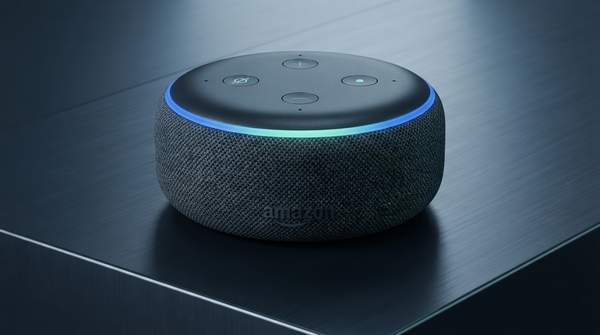
5. Smart Speaker (e.g. Amazon Echo Dot)
Best for: Voice control of smart devices, information retrieval, and entertainment.
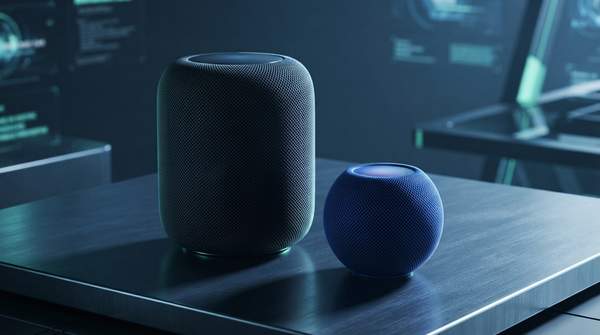
A smart speaker acts as the central voice command hub, simplifying interactions with other devices. It brings together music, news, and device control into one accessible interface, proving its utility in daily routines by making the entire smart home more intuitive.
Strengths: Voice control for entire ecosystem | Affordable | Wide range of integrations. | Limitations: Privacy concerns due to always-on microphone | Can be overwhelmed by complex commands | Sound quality may not satisfy audiophiles. | Price: $30-$60
Choosing Your Ecosystem: A Feature Comparison
| Feature | Google Home | Apple HomeKit | Amazon Alexa |
|---|---|---|---|
| Primary Control Method | Voice (Google Assistant), Google Home app | Voice (Siri), Home app | Voice (Alexa), Alexa app |
| Device Compatibility | Broad, many third-party integrations | Strict, focuses on certified devices | Very broad, large device catalog |
| Privacy Approach | Data collection for personalization | Strong on-device processing, less cloud data | Data collection for personalization |
| Ease of Integration | Good, especially with Google-owned devices | Excellent for Apple users, seamless setup | Good, often plug-and-play for many devices |
| Security Focus | Standard smart device security | Emphasis on end-to-end encryption for accessories | Standard smart device security |
How We Chose Our 'Essential' List
Our 'essential' list for 2026 goes beyond popularity. Priority was given to genuine daily utility and seamless integration over flashy features. Core criteria included undeniable ease of use, robust cross-platform integration, transparent privacy, and tangible benefits that simplify, not complicate, daily life. While Precedence Research projects significant market growth, we balanced this against user experiences highlighting friction. Devices requiring complex troubleshooting or adding steps were disqualified. We sought solutions that enhance existing habits with minimal disruption, emphasizing reliability and clear ROI in time saved or comfort gained.
Beyond the Hype: Making Smart Choices for Your Home
A truly smart home simplifies life, avoiding unnecessary complexity, cost, or privacy concerns. The market's current trajectory, prioritizing feature bloat over foundational ease-of-use and transparent privacy, risks alienating users who value simplicity and security. Companies pushing siloed devices without robust interoperability are selling shelfware, evidenced by high feature underutilization.
To avoid pitfalls, strategic purchasing and ecosystem planning are paramount. Consumers must research device interaction within a chosen ecosystem before buying disparate gadgets. ensuring devices work together, transforming individual technologies into a cohesive, helpful system. Even as IFA 2026 showcases next-gen tech, the challenge remains: simplicity and security over sheer feature count.
If the smart home market is to truly deliver on its promise, future success will likely depend on a radical shift towards open interoperability and a renewed focus on core utility, rather than simply more features.