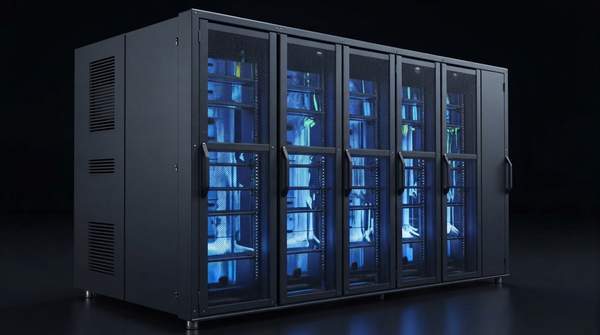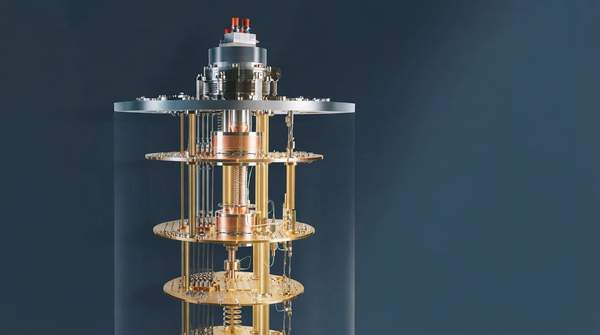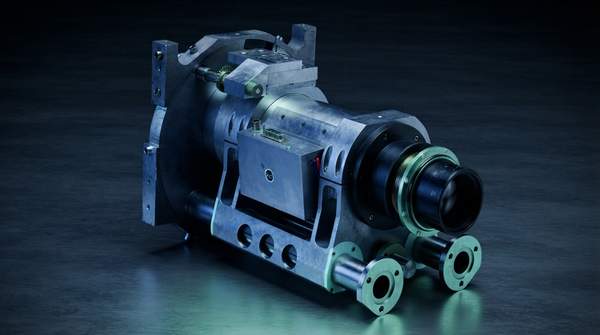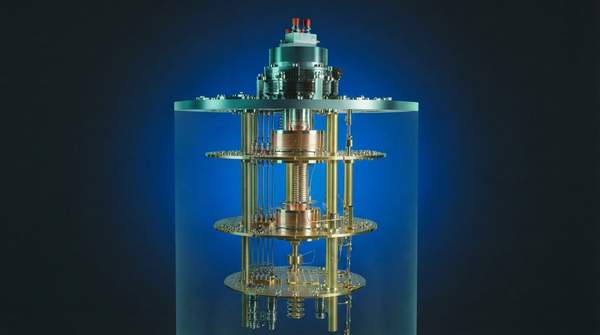
There is no single "best" quantum computer, and any vendor claiming otherwise is overselling. The four architectures with the most immediate commercial relevance—superconducting, trapped-ion, photonic, and neutral-atom—each embody a distinct engineering bargain: speed against stability, manufacturability against connectivity, scalability against error correction. Industry reporting is blunt on this point: no approach wins across all dimensions, and the right choice depends on the application and on which technical challenges prove easiest to solve for that specific use case. For an enterprise, that means the useful question is not "which architecture will win?" but "which trade-off profile matches our workloads, and how mature is that platform commercially today?"
Understanding Quantum Computing Architectures for Enterprise
Quantum hardware approaches vary widely because they encode information in fundamentally different physical systems—currents in superconducting circuits, charged atoms held in electromagnetic traps, particles of light, or arrays of individual neutral atoms. As trade publication The Quantum Insider noted in its 2026 overview of major approaches, superconducting and trapped-ion systems are among the most commercially developed today, while neutral atoms and photonics are advancing toward larger-scale applications. Topological qubits remain experimental and contested, and quantum annealers form a separate category aimed specifically at optimization problems rather than general-purpose computation.
We see two consequences for enterprise planning. First, the commercial landscape is genuinely multi-vendor: IBM and IonQ, for instance, build on very different physical systems, so a procurement conversation with one vendor does not transfer cleanly to another. Second, headline qubit counts are a poor proxy for capability. Because qubit quality and stability differ sharply across architectures, direct comparisons of qubit numbers do not necessarily indicate the quality of the quantum computer—a point emphasized by Chicago Quantum's coverage of the competing hardware approaches. An enterprise evaluation therefore has to look past raw specifications and ask what each architecture is actually good at.